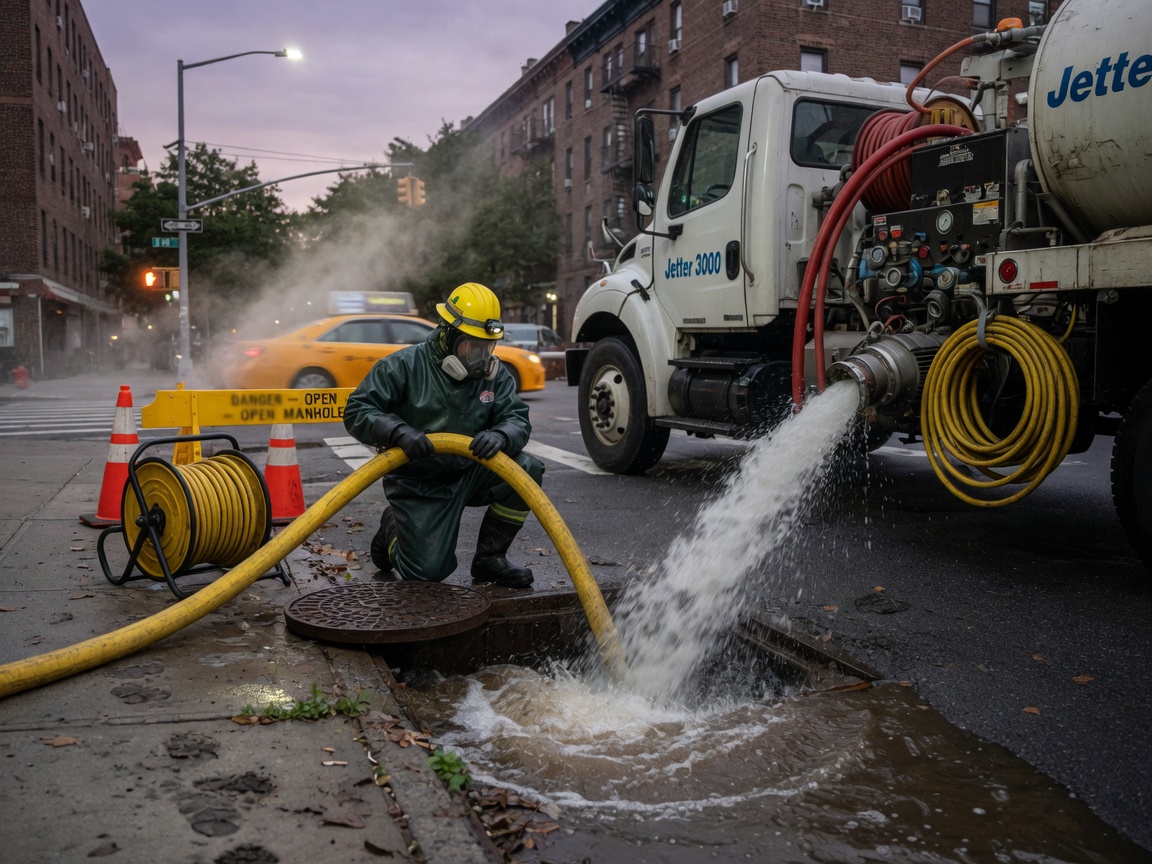
New York City's dense housing stock, especially pre-1940 brownstones in Brooklyn and cast-iron stacks in Manhattan, creates recurring sewer issues from grease, wipes, and root intrusion. Hydro jetting uses 3,000-4,000 psi water streams through specialized nozzles to scour pipe walls without excavation. In older clay or cast-iron lines common under narrow streets in neighborhoods like Park Slope and Astoria, operators must control pressure to avoid cracking brittle joints while still removing decades of buildup that standard snaking leaves behind.
Seasonal cold snaps in the five boroughs can harden grease deposits in shallow sewer laterals, turning routine backups into full blockages that affect multiple units in walk-up buildings. Hydro jetting reaches farther than mechanical tools and restores full flow in lines running beneath sidewalks and courtyards where access pits are limited. Crews working in these tight urban settings often coordinate with building supers to isolate sections before jetting to prevent wastewater from re-entering occupied spaces.
After jetting, technicians run a final camera inspection to confirm no hidden offsets or fractures were worsened during the process. This step is critical in NYC where many lines predate modern PVC and sit near subway tunnels or high water tables that can shift soil around pipes. Property owners receive a written summary noting pipe condition and any recommended follow-up monitoring for buildings with known shared laterals.
Technician insight
In New York City, the thing that catches most people out with Sewer Hydro Jetting is how quickly high pressure can open a crack in 80-year-old cast-iron joints under brownstones in neighborhoods like Park Slope or the Upper West Side when operators push too hard on a grease plug instead of working it gradually.
Park Slope Brownstone Backup
A multi-unit brownstone in Brooklyn reported recurring backups after heavy rain. Camera inspection showed a grease and root plug 40 feet from the cleanout in an old clay lateral. Controlled hydro jetting cleared the obstruction without fracturing the brittle pipe sections. Flow was restored and the building avoided excavation.
Sewer Hydro Jetting Services We Offer
✓Residential Sewer Line Jetting
High-pressure clearing of main sewer lines serving single-family homes and brownstones in Brooklyn and Queens where grease and paper buildup is common.
✓Commercial Kitchen Drain Jetting
Targeted jetting of restaurant and food-service lines to remove heavy grease mats before they reach the city main in dense Manhattan and Bronx blocks.
✓Tree Root Intrusion Removal
Hydro jetting combined with root-cutting heads to clear roots that penetrate old clay pipes under tree-lined streets in historic neighborhoods.
✓Storm Drain and Catch Basin Cleaning
Jetting of exterior storm lines and basement catch basins that collect debris during heavy NYC rain events and risk street flooding.
✓Multi-Unit Building Main Clearing
Coordinated jetting of shared sewer mains serving walk-ups and apartment houses where access is limited to small courtyards or sidewalks.
Sewer Hydro Jetting Cost in New York
| Service | Typical Range | What Affects It |
|---|---|---|
| Residential Main Line Jetting | $450–$950 | Varies with depth of cleanout and length of run in older Brooklyn and Queens homes |
| Commercial Kitchen Line | $600–$1,400 | Higher when heavy grease requires multiple passes or repeated visits |
| Root Cutting And Jetting | $550–$1,100 | Depends on root density and whether follow-up treatments are needed |
| After-Hours Or Weekend Call | $150–$300 | Added to base service for 24/7 response in any borough |
Ranges are typical for New York and confirmed with an exact written quote before any work starts.
How it works
- 1
Site Assessment
Technician reviews access points, checks for shared laterals, and identifies pipe material typical of the building's age in the specific neighborhood.
- 2
Equipment Setup
Hose is fed through the cleanout or roof vent while protecting surrounding surfaces in tight urban basements and sidewalks.
- 3
Controlled Jetting
Progressive passes with different nozzles break up grease, roots, and sediment while monitoring pressure to protect aging cast-iron sections.
- 4
Final Verification
Camera inspection confirms restored flow and notes any pipe conditions that may need future attention before leaving the site.
Pricing
Typical residential jobs range from a few hundred to over a thousand dollars depending on line length, access difficulty, and clog severity; commercial and multi-unit work is quoted after assessment.