2026-08-22 · Ray Kopca
Hydro Jetting or Sewer Line Replacement: Which Do You Need?
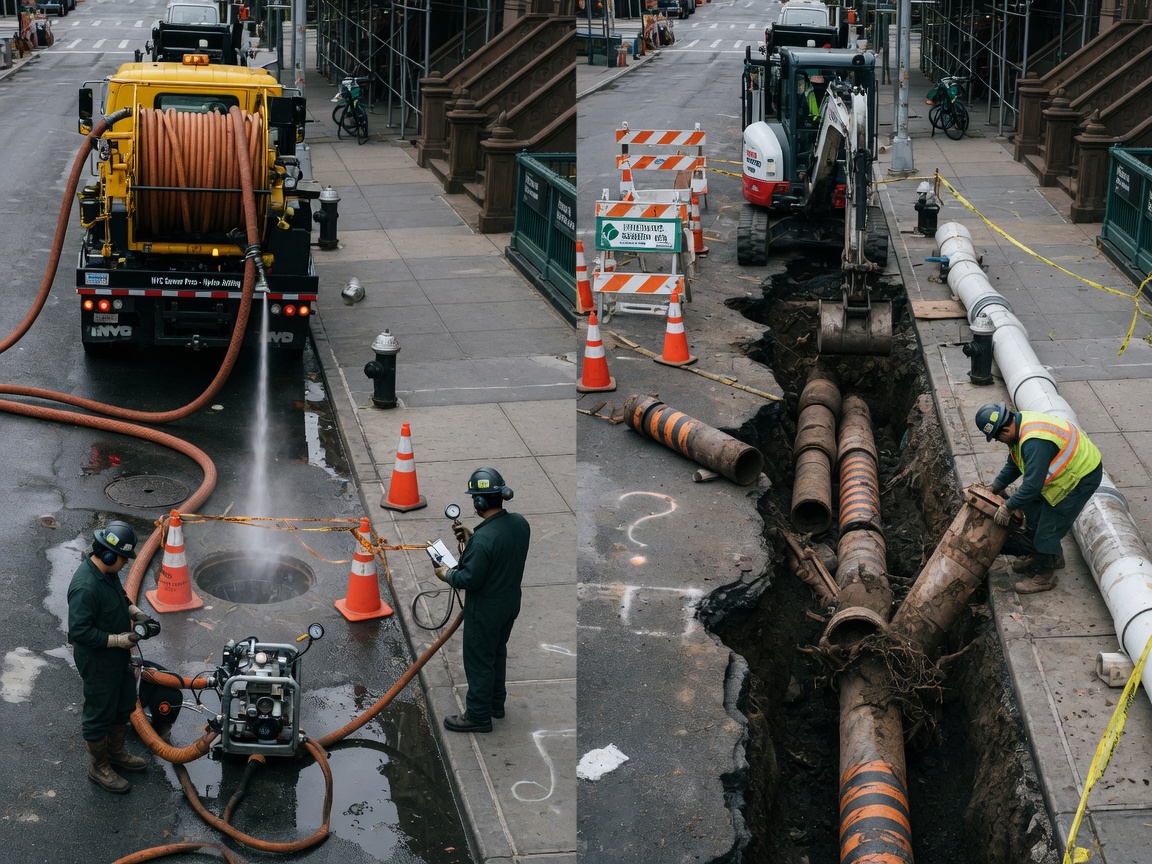
In New York City, hydro jetting resolves the majority of slow drains and backups when the sewer line still holds structural integrity, while full replacement is needed only after repeated failures or visible pipe collapse confirmed by camera inspection.
Assessing Pipe Condition First
Start every job in neighborhoods like Brooklyn Heights or Astoria by running a camera through the line to check for cracks, offsets, or root intrusion. Cast iron pipes installed before 1950 in these areas commonly show scale buildup from decades of use, and hydro jetting at 4,000 PSI removes grease and debris without damaging intact walls. When the camera reveals holes or collapsed sections, especially after heavy summer rains that saturate the soil around Queens foundations, replacement becomes the only lasting fix. Homeowners in Manhattan brownstones often see the difference clearly once footage shows whether the line can handle ongoing pressure washing.
Common Triggers in NYC Housing Stock
Pre-war apartments and row houses throughout the five boroughs rely on clay or cast iron mains that shift with freeze-thaw cycles each winter. A single heavy rain event can push sediment into joints already weakened by age, creating recurring clogs that hydro jetting clears in one visit. In contrast, when tree roots from street plantings in Park Slope have penetrated multiple joints, the line usually needs excavation and replacement rather than repeated cleaning. Local operators note that lines under 6 inches in diameter in older districts fail faster under high-pressure cleaning once the pipe wall thins below safe limits.
Cost and Longevity Comparison
Hydro jetting typically runs $400–$900 for a residential main in New York City and restores flow for 3–5 years when performed on sound pipes. Full sewer line replacement costs $8,000–$18,000 depending on depth and sidewalk permits required in dense blocks, yet it delivers a 40–50 year lifespan with modern PVC. Property owners in areas like the Bronx weigh these numbers against the frequency of backups; two or more hydro jetting calls within 18 months usually tip the decision toward replacement. The 24-hour availability of crews helps when an emergency backup occurs on a weekend in high-traffic commercial corridors.
Decision Steps for Property Owners
- Request a camera inspection to document pipe material and damage extent.
- Review footage with the technician to identify whether scale or structural failure is the root cause.
- Compare the projected interval between future cleanings against replacement cost and disruption.
- Factor in upcoming construction or landscaping that could disturb the line again.
These steps prevent unnecessary excavation while protecting the investment in older New York City properties.
When to Schedule Follow-Up Service
After hydro jetting succeeds, schedule annual inspections in high-root zones such as tree-lined streets in Brooklyn and Queens to catch new growth early. Properties that have already undergone partial replacement benefit from targeted hydro jetting on the remaining older sections. When signs like gurgling toilets or slow basement drains return within months, review footage again before committing to another cleaning round. The article Signs Your Sewer Line Needs Hydro Jetting outlines additional visual cues common to local homes. For commercial buildings facing repeated grease issues, main sewer line cleaning paired with regular jetting often extends the time before replacement discussions begin.