2026-08-22 · Ray Kopca
How Does Hydro Jetting Work?
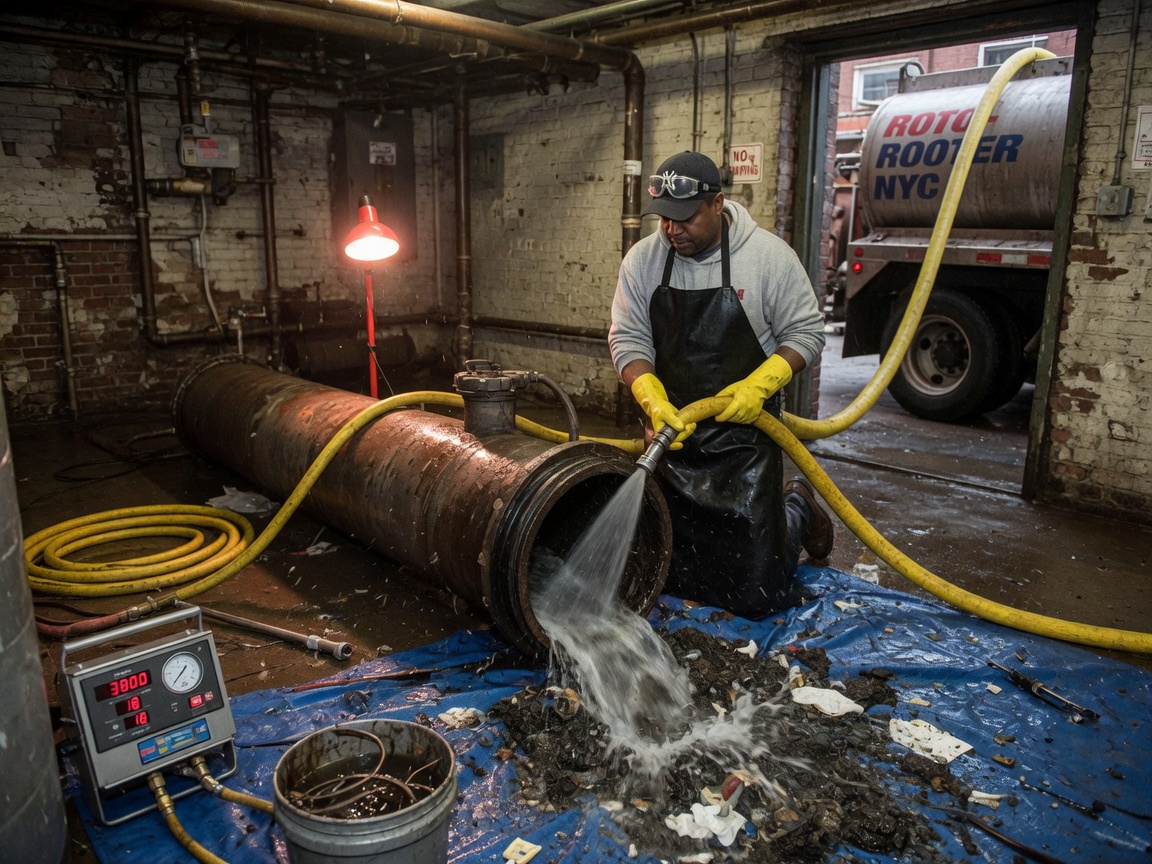
Hydro jetting works by propelling a high-pressure stream of water through a specialized nozzle inserted into drain lines to scour away buildup and restore flow. In New York City this method addresses clogs in cast-iron stacks and clay sewer laterals that have served brownstones and pre-war apartments for decades. The water pressure reaches 3,500 to 5,000 psi while the nozzle rotates to hit every interior surface of the pipe.
The Science of High-Pressure Water Cleaning
Water exits the nozzle through forward and rear jets. Forward jets break apart obstructions while rear jets propel the hose deeper and flush debris back toward the access point. The combination creates a scouring action that removes layers of grease, mineral scale, and fine roots without chemicals. In neighborhoods such as Brooklyn Heights and the West Village, where many buildings date to the early 1900s, this action clears pipes that have narrowed from decades of use. Operators adjust pressure based on pipe material so older cast iron does not crack under excessive force.
Equipment and Setup in Urban Settings
A typical rig includes a diesel-powered pump, 400-foot hose reel, and camera inspection head mounted on a truck that can park on narrow Manhattan streets or Queens side alleys. The nozzle selection changes with the job: a 4-inch chain head for heavy grease in restaurant lines and a 6-inch penetrator for root masses in residential laterals. Technicians first run a camera through the line to map bends and locate the clog before committing the jetter. This step prevents the hose from getting stuck in the offset joints common in New York City sewer connections.
Step-by-Step Execution on Site
Technicians begin by exposing a cleanout or removing a toilet to gain access. They feed the hose while monitoring pressure and flow on the control panel. Once the nozzle reaches the clog, the operator holds position until water pressure breaks through, then advances slowly to scour the pipe walls. In areas like Astoria and Flatbush, where tree roots frequently invade clay laterals, the process may take 45 to 90 minutes per line. After the jetter is withdrawn, a final camera pass confirms the pipe is clear and shows any remaining defects that need future attention.
Local Conditions That Change the Job
New York City winters freeze shallow sewer lines near sidewalks, creating ice dams that require lower initial pressure to avoid pipe damage. Summer thunderstorms send heavy runoff into combined sewers, pushing grease and debris into building traps. These seasonal patterns mean hydro jetting calls spike after both cold snaps and downpours. Operators serving New York City keep trucks stocked with multiple nozzle sizes to handle the mix of 3-inch kitchen stacks and 6-inch main laterals found in the same block.
For readers who want to see the full sequence in practice, the article What Happens During a Hydro Jetting Service? walks through an actual job from arrival to cleanup. Those comparing options can review Hydro Jetting or Sewer Line Replacement: Which Do You Need? to understand when repeated jetting is no longer the best solution.
NY Hydro Jet Pros maintains 24-hour availability so property managers in any borough can schedule service the same day a backup occurs.