2026-08-22 · Ray Kopca
Hydro Jetting: Complete Guide for New York Property Owners
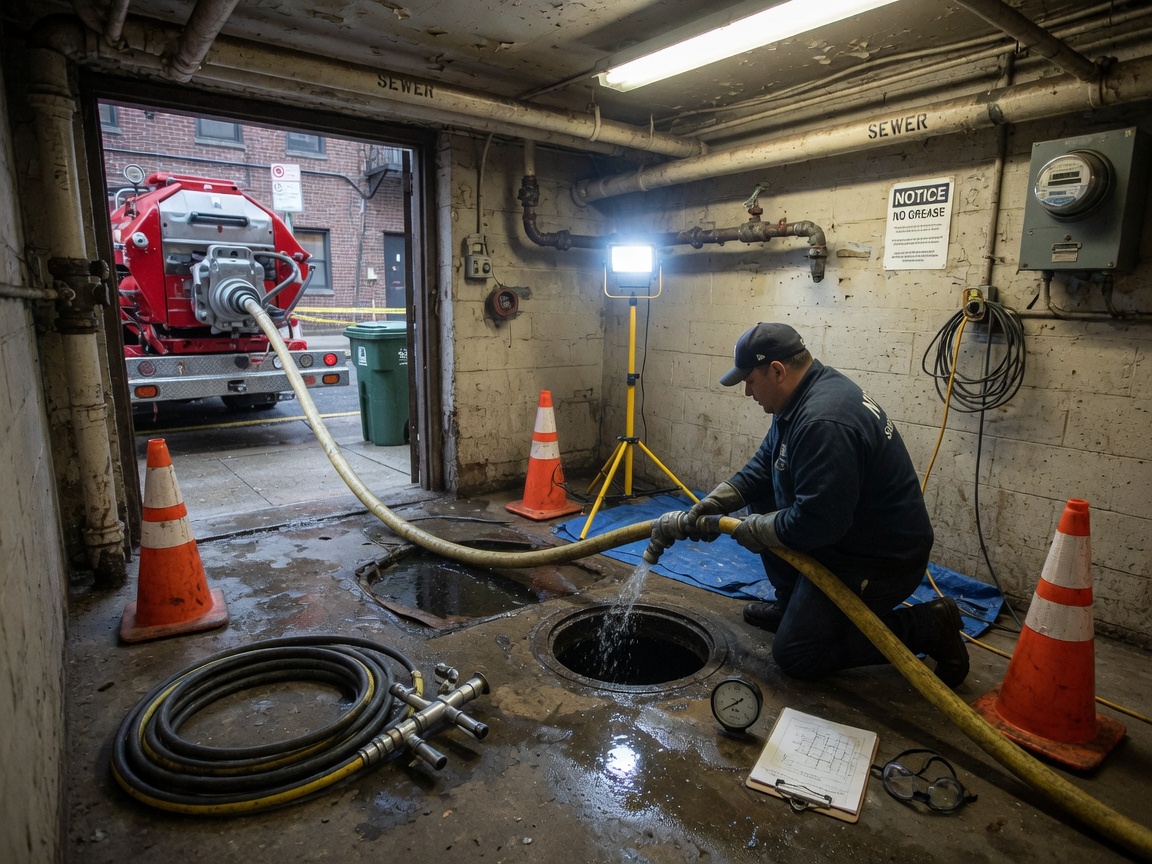
Hydro jetting services address persistent drain and sewer blockages in New York City by directing high-pressure water through lines to scour buildup from pipe walls. In a city where many buildings predate 1940 and rely on cast iron or clay pipes, this method reaches debris that mechanical snakes leave behind. Owners in Manhattan brownstones and Queens row houses often see results that last through multiple seasons when roots or grease are the main culprit.
Understanding Hydro Jetting
Hydro jetting uses specialized nozzles attached to hoses that propel water at pressures suited to residential and commercial lines. The process breaks apart compacted grease, mineral scale, and root intrusions without chemicals. In New York City the technique proves especially useful because many properties sit on combined sewer systems that carry both stormwater and wastewater, increasing the chance of backups during heavy spring rains. Technicians adjust nozzle angles and pressure based on pipe material and diameter to avoid damage to older joints common in pre-war structures. This approach restores full flow rather than simply punching a temporary hole through the obstruction.
Common Issues in New York City Properties
Tree roots from street plantings frequently invade sewer laterals in Brooklyn and the Bronx, where soil shifts from freeze-thaw cycles create entry points at pipe joints. Grease accumulation from restaurant kitchens in Manhattan and parts of Queens builds rapidly in narrower 4-inch lines, turning into hard deposits that reduce capacity. Heavy rainfall in the New York City area can overwhelm older combined sewers, pushing sediment back into basements. Property owners notice slow drains on upper floors first when main lines are partially blocked. These conditions differ from newer suburban developments because NYC housing stock often includes shared laterals and limited access points.
The Hydro Jetting Process Step by Step
Technicians begin with a camera inspection to map the line and identify material type. They select a nozzle matched to the clog and pipe size, then feed the hose from the cleanout or roof vent. Water pressure scours walls while the operator monitors progress with the camera. In dense neighborhoods like those around Central Park or along the East River, crews must manage limited staging space and coordinate with building management for access. After clearing, a final camera pass confirms restored flow and checks for cracks that may need further attention. The entire job on a typical single-family line takes two to four hours depending on access and debris volume.
When to Schedule Hydro Jetting
Recurring clogs after snaking, gurgling sounds from fixtures, or sewage odors near floor drains signal the need for hydro jetting over basic cleaning. In New York City, schedule service before winter when frozen ground can worsen existing restrictions. Properties near parks or with mature street trees benefit from annual checks because roots grow fastest in spring. When Do You Need Hydro Jetting? outlines additional warning signs. Commercial kitchens in areas like Hell's Kitchen often require grease trap hydro jetting every few months to stay ahead of FOG buildup. How Tree Roots Affect Sewer Lines explains why root issues appear more frequently in certain boroughs.
Choosing Between Hydro Jetting and Replacement
Hydro jetting restores many lines that still have sound structural integrity, avoiding the excavation required for full replacement in tight urban lots. When pipes show widespread cracking or offset joints from decades of settlement, replacement becomes necessary. Hydro Jetting or Sewer Line Replacement: Which Do You Need? compares the two options with examples from older New York City neighborhoods. Owners can inspect the post-jet camera footage to decide whether ongoing maintenance will suffice. NY Hydro Jet Pros remains available 24 hours a day, seven days a week, for emergency calls when backups occur outside normal business hours.