2026-08-22 · Ray Kopca
The Complete Sewer & Drain Maintenance Guide for New York Properties
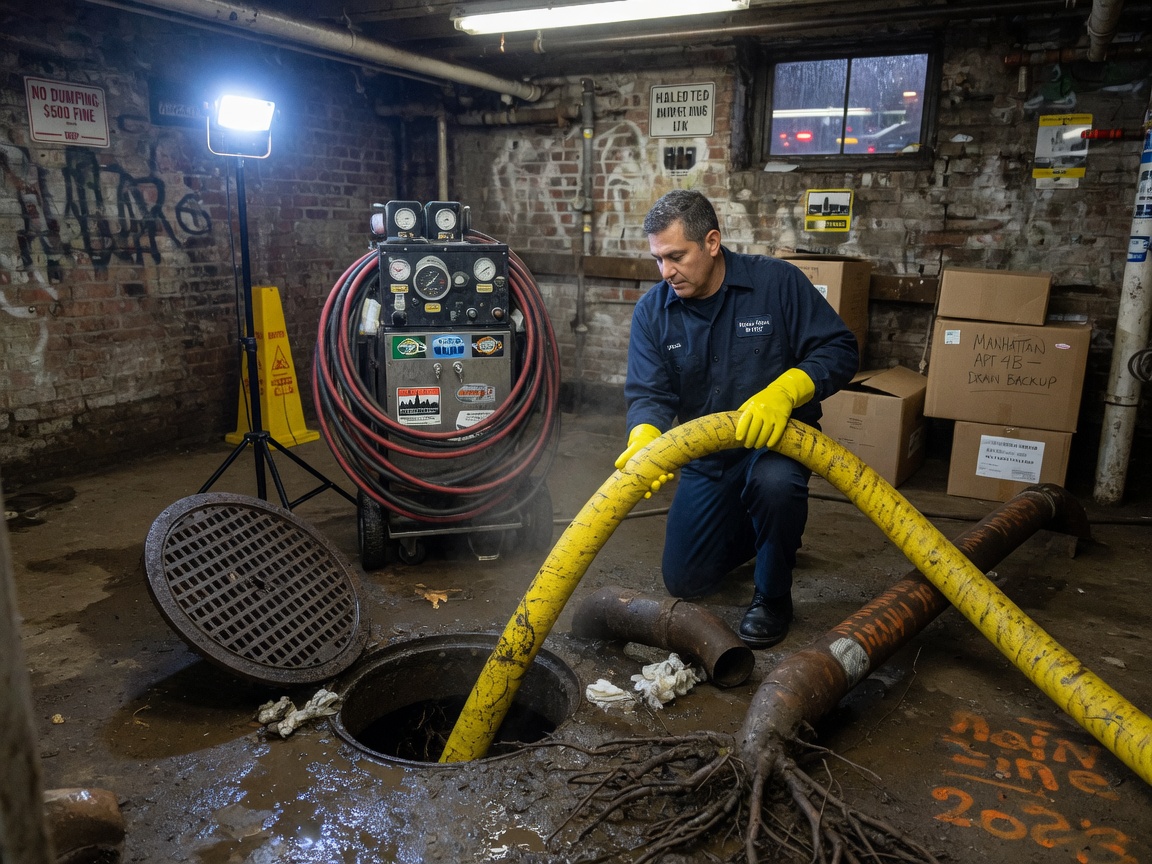
New York City properties built before 1940 often rely on cast-iron or clay sewer lines that crack or clog after decades of use. Regular maintenance prevents backups that flood basements in Brooklyn brownstones and Queens row houses during nor'easters. Homeowners who schedule inspections every 18 to 24 months catch root intrusion and grease buildup early, avoiding the $2,800 average cost of emergency excavation in Manhattan.
Aging Infrastructure in NYC Neighborhoods
Pre-war buildings in Brooklyn Heights and Park Slope still use original 4-inch clay laterals that shift with freeze-thaw cycles common along the East River. These pipes collect sediment faster than modern PVC because their rough interiors trap debris from combined sewer overflows after summer thunderstorms. In Queens neighborhoods such as Astoria and Long Island City, high water tables push groundwater into joints, accelerating corrosion. Owners of 1920s co-ops in Manhattan should map their main line location before any interior renovation, since many run under shared hallways. Checking cleanouts twice a year reveals early warning signs like slow drains on the first floor that indicate partial blockages 30 to 50 feet downstream.
Seasonal Weather Impacts on Drains
Winter temperatures dropping below freezing in the Hudson Valley region cause fats to solidify inside lines serving restaurants near Times Square. Spring snowmelt combined with April rains overwhelms older combined systems in the Bronx, sending backflow into ground-floor apartments. Summer humidity increases grease trap loading in commercial kitchens along Smith Street in Carroll Gardens. Fall leaf debris clogs street-level catch basins in tree-lined blocks of Park Slope, forcing water into foundation drains. Properties near the Gowanus Canal face tidal influence that raises water levels in laterals during high tide, requiring more frequent hydrojet drain cleaning to keep solids moving.
Routine Maintenance Steps for Property Owners
Begin each season by running hot water through every fixture for five minutes while checking for gurgling sounds at floor drains. Pour a gallon of water into basement cleanouts monthly to confirm flow toward the street. In multi-family buildings in Flatbush, label each unit's cleanout so plumbers can isolate problems without tearing up shared walls. Keep a log of any slow-draining fixtures and note the date; patterns often point to a main line restriction 20 to 40 feet from the building. Avoid chemical cleaners that damage old cast iron; instead schedule professional hydro jetting services when two or more fixtures back up simultaneously.
When Hydro Jetting Becomes Necessary
Hydro jetting services clear grease, scale, and roots that snaking alone leaves behind in 6-inch mains common under 19th-century townhouses. Hydro Jetting Services uses 4,000 psi water streams that restore full pipe diameter without excavation. Property managers in Williamsburg call for Main Sewer Line Cleaning after heavy restaurant grease discharge clogs lines serving multiple buildings. How Does Hydro Jetting Work? explains the nozzle selection process that matches pressure to pipe material so older clay lines are not damaged. When Do You Need Hydro Jetting? lists indicators such as recurring backups after snaking or visible root fragments in cleanout water.
24/7 Response and Professional Care
NY Hydro Jet Pros remains open 24 hours, 7 days a week to handle after-hours backups that occur when office workers return home in the evening. Technicians arrive with truck-mounted units sized for both residential 4-inch laterals and 8-inch commercial mains found under mixed-use buildings in Greenpoint. They document pipe condition with camera footage before and after each job so owners can track deterioration over time. This approach keeps maintenance records that satisfy insurance requirements during claims for water damage in cellars near the Brooklyn Navy Yard.