2026-08-22 · Ray Kopca
When Hydro Jetting Is Not the Right Solution
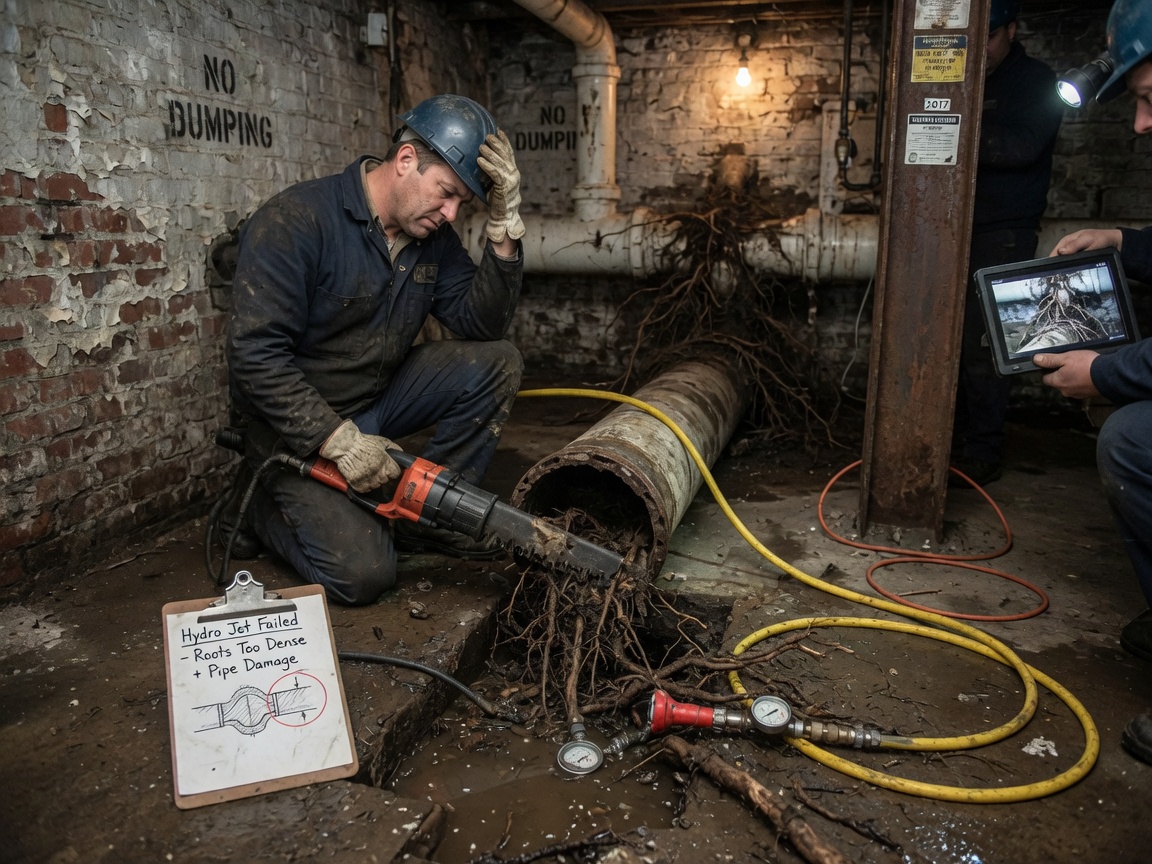
Hydro jetting is not the right solution when pipes are collapsed, cracked, or offset, which occurs often in New York City buildings constructed before 1940. In neighborhoods such as Greenwich Village and Brooklyn Heights, cast iron and clay lines from that era can fracture under the 4,000 psi pressure needed to scour grease and scale. A camera inspection first reveals these conditions so crews avoid turning a partial blockage into a full excavation.
Collapsed or Offset Joints in Pre-War Buildings
Manhattan and Brooklyn brownstones frequently contain 4-inch and 6-inch cast iron mains that have shifted from decades of settling and vibration from subway lines. When joints separate by more than half an inch, water pressure from hydro jetting simply escapes into the surrounding soil rather than clearing the line. In these cases technicians switch to sectional replacement or cured-in-place pipe lining. The same limitation applies to clay tile laterals installed before 1930 in parts of Queens; the material cracks under sustained high pressure and requires direct repair instead.
Heavy Root Intrusion That Needs Mechanical Cutting First
Tree roots from London plane trees common along NYC sidewalks penetrate joints in older sewer laterals. Hydro jetting can slice small roots but leaves larger ones intact and can drive fragments farther downstream. Crews therefore run a powered root cutter through the line first, then follow with hydro jetting only after confirming clear passage. This two-step approach prevents repeat calls that occur when jetting alone is used on root-blocked mains serving single-family homes in areas like Forest Hills.
When the Line Requires Replacement Rather Than Cleaning
In buildings where multiple offsets or bellied sections exist, repeated hydro jetting shortens pipe life instead of extending it. A 20-foot section of 6-inch cast iron that has already lost 60 percent of its wall thickness will not survive another 3,500-psi pass. At that point the correct action is spot repair or full reroute, often coordinated with the building's 24-hour maintenance staff. Homeowners in co-op buildings on the Upper West Side see this pattern when original 1920s stacks begin to separate at the roof line.
Situations Involving Grease Traps or Commercial Lines
Restaurant grease traps in Manhattan require scheduled pumping before any jetting occurs. Attempting high-pressure cleaning on a trap still full of FOG simply pushes the material into the building sewer and creates a larger downstream blockage. Sewer Hydro Jetting crews therefore coordinate with trap service providers first. The same sequence applies to multi-tenant commercial buildings where one tenant's discharge can re-contaminate a line that was just cleaned.
Choosing the Right Next Step After Inspection
A thorough camera survey determines whether hydro jetting, snaking, or excavation is appropriate. When the footage shows intact pipe walls with only surface scale, Hydro Jetting vs. Drain Snaking: Which Works Better? outlines the pressure and cable options that match each condition. Property managers who need an assessment at any hour can reach NY Hydro Jet Pros because the company operates 24 hours, 7 days a week.