2026-08-22 · Ray Kopca
Commercial Hydro Jetting: What New York Businesses Need to Know
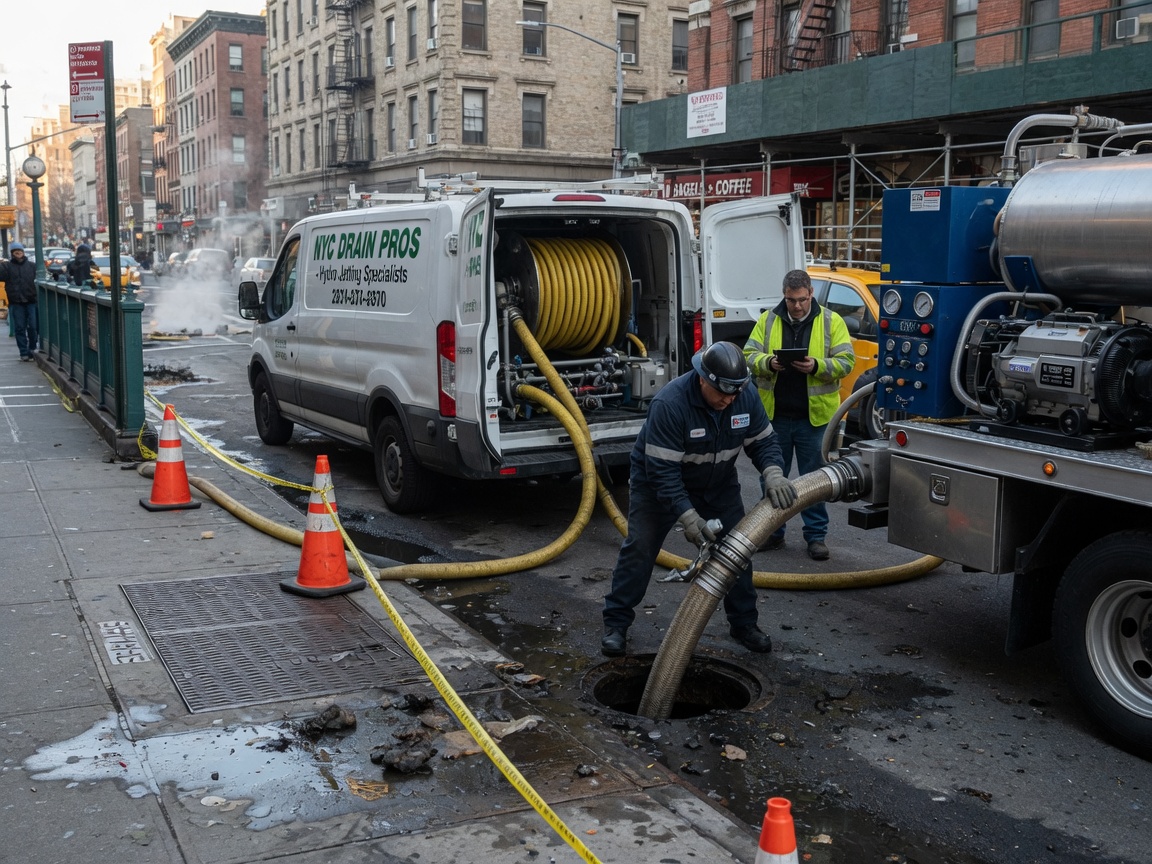
Commercial hydro jetting in New York City clears heavy grease and debris blockages from restaurant and retail lines in 2–4 hours for most properties when performed with 4,000–5,000 PSI equipment. Older cast-iron and clay pipes common in pre-war buildings throughout Manhattan and Brooklyn respond well when technicians match pressure to pipe condition rather than using maximum force on every job.
Why NYC Commercial Properties Experience Recurring Clogs
New York City commercial buildings built before 1940 often contain 4- to 6-inch cast-iron laterals that have narrowed from decades of scale and grease. Restaurants in neighborhoods such as the East Village, Williamsburg, and Long Island City generate daily grease loads that standard snaking cannot fully remove. Heavy rainfall events send stormwater into combined sewers, pushing sediment back into building traps and creating backups that surface during peak lunch or dinner hours. These conditions make periodic high-pressure cleaning necessary rather than optional for properties with food service or high foot traffic.
How Commercial Hydro Jetting Differs from Residential Work
Commercial lines in New York City frequently run longer distances and carry higher volumes than residential laterals, requiring larger jetter hoses and specialized nozzles that cut through compacted grease. Commercial hydro jetting services address these differences by using truck-mounted units that maintain consistent pressure over 200–300 feet of line. Operators also inspect for offset joints common in older Manhattan and Queens buildings before beginning, preventing water from escaping into surrounding soil during the job. This approach keeps businesses open the same day in most cases.
Special Considerations for Restaurants and Grease Traps
Restaurants along corridors like Ninth Avenue or Atlantic Avenue accumulate fats that solidify in traps and downstream piping within weeks. Grease trap hydro jetting combined with line cleaning removes material that pumping alone leaves behind. Operators typically schedule these visits during overnight hours to avoid disrupting service, and the 24-hour availability allows same-day response when a backup occurs during weekend rushes. Regular jetting every 6–12 months prevents health-department violations that can close kitchens for days.
What Happens During a Commercial Hydro Jetting Service
Technicians begin by locating cleanouts and running a camera to map the line and identify any damaged sections. What happens during a hydro jetting service includes inserting a high-pressure hose with a forward-cutting nozzle that breaks up blockages while a trailing nozzle scours pipe walls. In New York City buildings with multiple stories, crews often work from roof vents or basement cleanouts to reach upper-floor laterals without disrupting tenants. Water recovery equipment captures debris so it does not enter the municipal sewer during the flush.
Planning for Ongoing Maintenance in Urban Settings
Business owners in New York City benefit from keeping records of each jetting visit, including camera footage that shows pipe condition over time. Linking jetting with routine grease trap hydro jetting reduces emergency calls during summer storms when combined sewers are already stressed. Properties that schedule service before holiday peaks or during slower winter months experience fewer daytime disruptions. How does hydro jetting work explains nozzle selection and pressure settings that protect older pipes while still delivering thorough cleaning.