2026-08-22 · Ray Kopca
What Happens During a Hydro Jetting Service?
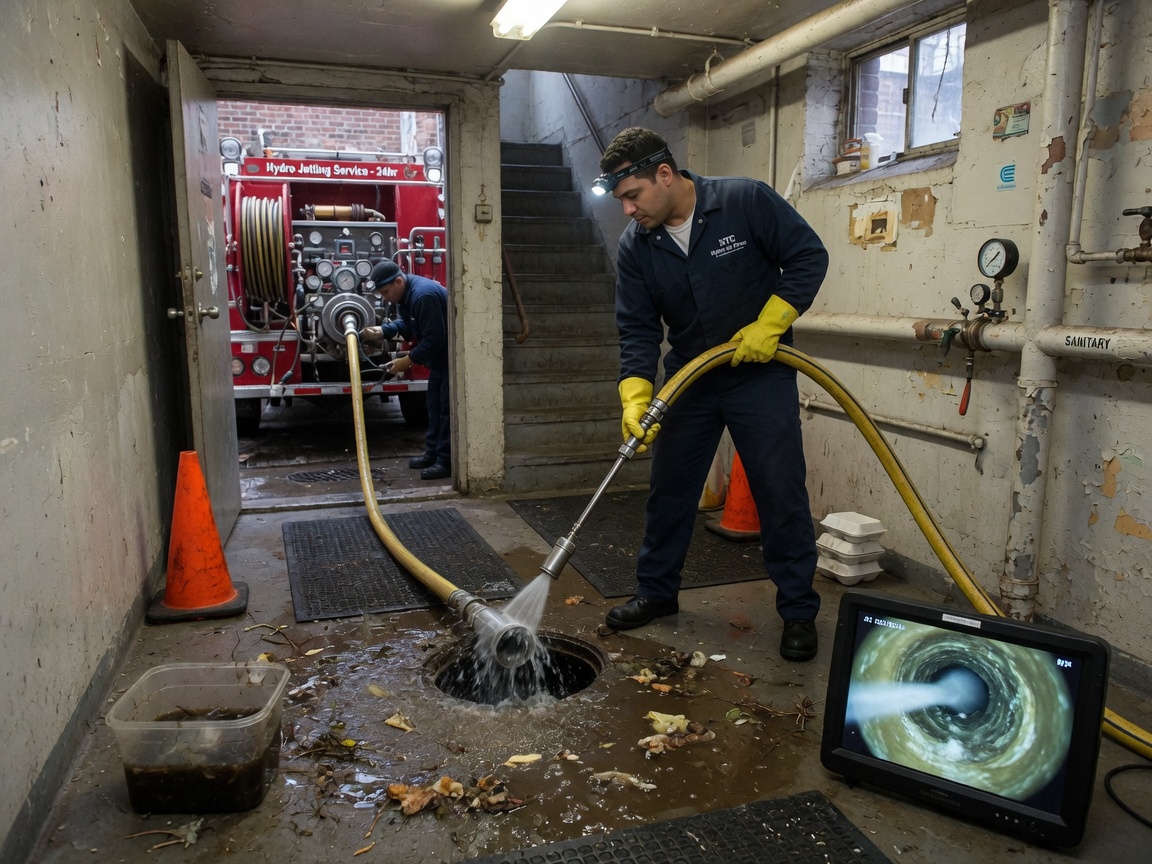
A hydro jetting service in New York City begins with a camera inspection of the line followed by insertion of a hose that delivers water at 3,500–4,500 PSI to scour grease, roots, and scale from pipe walls, with the full process usually lasting 90 minutes to three hours on a typical residential main.
Camera Inspection and Diagnosis
Technicians first feed a waterproof camera through the cleanout or access point to map the pipe run and locate the blockage. In neighborhoods such as Brooklyn Heights and Greenwich Village the footage often reveals decades of grease buildup or root intrusion where 4-inch cast iron meets clay laterals installed before 1940. The recorded video shows exact distances and pipe condition so the crew can select the correct nozzle and pressure setting without guesswork. This step prevents unnecessary excavation in tight Manhattan basements or Queens row-house yards where digging is restricted by neighboring foundations.
Equipment Setup on Site
Once the line is mapped, the truck positions the jetter within 50 feet of the access point and connects 3/8-inch or 1/2-inch hose rated for 5,000 PSI. In dense blocks of the Bronx or Jackson Heights the operator must sometimes run hose through alley gates or down areaways while keeping the diesel unit on the street to meet noise rules. The chosen nozzle—usually a forward-blasting penetrator or a 6-jet rotating head—is attached and tested at low pressure before full flow begins. Crews also stage spill containment mats because NYC storm drains sit close to many residential cleanouts.
High-Pressure Clearing Process
Water is ramped up to operating pressure and the hose is advanced slowly from the downstream end so debris is flushed toward the main rather than packed deeper. In older New York City lines the rotating head scours scale that has narrowed the bore from 4 inches to barely 2 inches, restoring full flow in a single pass. Operators pause every 10–15 feet to let the water carry loosened material out, preventing re-clogging. The same technique works on Sewer Hydro Jetting jobs where commercial grease traps in Hell’s Kitchen restaurants release heavy FOG loads after weekend service.
Final Camera Verification and Cleanup
After the jetter reaches the street main a second camera pass confirms the pipe walls are clean and free of remaining roots or scale. Any minor surface scuffs on cast iron are noted but rarely require immediate repair. The crew then flushes the line with fresh water, removes the hose, and restores the cleanout cap. Homeowners in areas like Astoria or Park Slope often receive a short video file showing before-and-after footage so they can see the restored diameter. For readers noticing recurring slow drains the article Signs Your Sewer Line Needs Hydro Jetting outlines early indicators before a full stoppage occurs.
Post-Job Considerations in NYC Housing Stock
Many pre-1920 buildings still rely on 3-inch or 4-inch cast iron laterals that have bell-and-spigot joints prone to offset after decades of settlement. Hydro jetting clears the interior without disturbing those joints when pressure stays within manufacturer limits. Crews working in flood-prone zones near Jamaica Bay or the Gowanus Canal also check for backflow valves because heavy rain can push debris back into freshly cleaned lines. Property owners who want to reduce future calls can review New York Sewer Maintenance: How to Prevent Major Blockages for seasonal maintenance timing that matches the city’s combined sewer system cycles.