2026-08-22 · Ray Kopca
How Much Does Hydro Jetting Cost in New York?
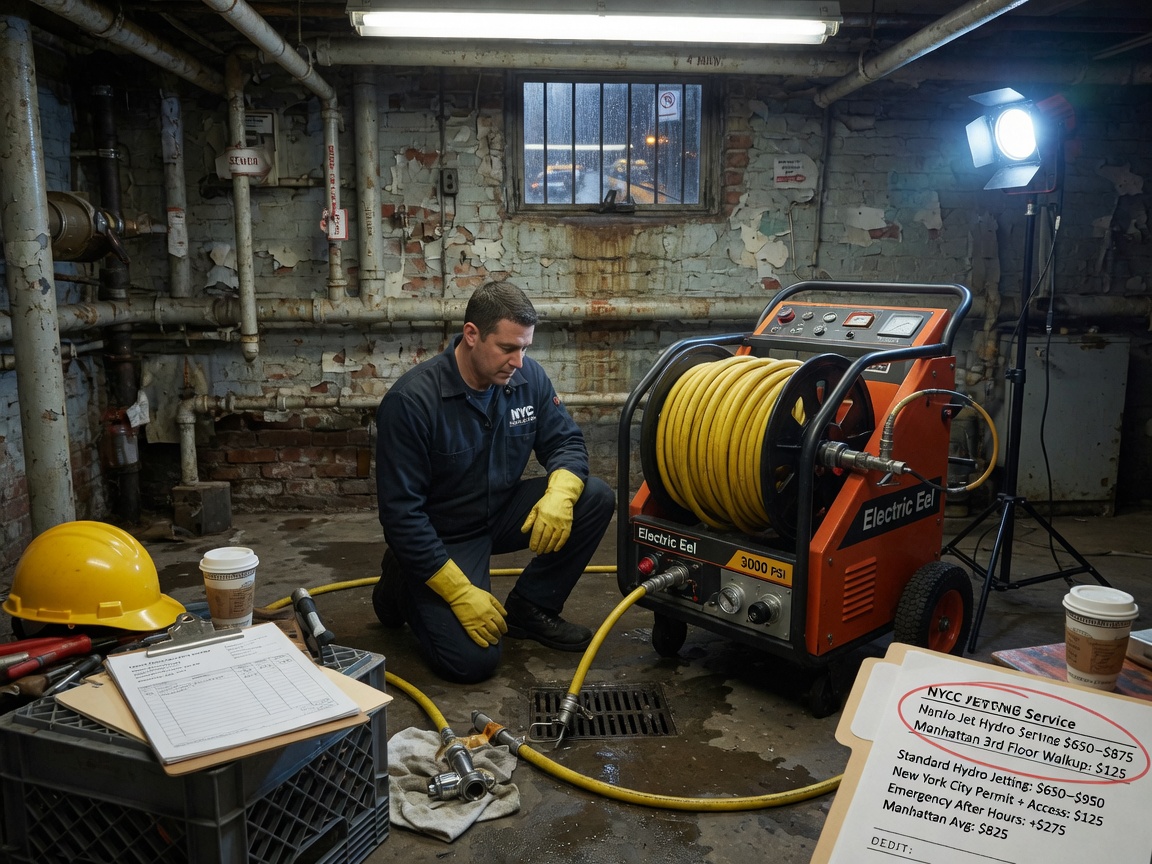
Hydro jetting services in New York typically cost $400–$1,100 for standard residential drain or sewer lines in neighborhoods such as Brooklyn and Queens. Main-line jobs in older Manhattan buildings often reach $950–$1,400 when access is tight and debris loads are heavy. These ranges reflect hands-on work on 80- to 120-year-old cast-iron pipes that dominate the housing stock.
What Drives Hydro Jetting Prices in New York City
Pipe age and material set the baseline. Pre-1940 homes in Brooklyn Heights and parts of Queens still rely on original cast-iron stacks that accumulate decades of scale and grease. Hydrojet drain cleaning must run at 3,500–4,000 psi for longer cycles to restore flow without cracking brittle sections. Tree-root intrusion is common along streets lined with maples in residential blocks of North Hempstead, adding 30–45 minutes of extra cutting time per job. Access points matter too: sidewalk cleanouts in dense Manhattan blocks require permits and traffic control that suburban crews never face. Seasonal cold snaps freeze shallow laterals under uninsulated sidewalks, turning routine calls into full-day excavations before jetting can begin.
Typical Cost Breakdown by Job Type
A single kitchen or bath line hydro jetting session usually lands between $400 and $650 when the clog sits within 25 feet of the cleanout. Full main sewer line cleaning on a standard two-story row house runs $750–$1,100 because crews must clear the entire run to the city connection. Commercial grease-trap hydro jetting in restaurant districts of Queens starts at $850 and climbs with trap size and weekly buildup volume. Multi-unit buildings in the Bronx or Upper Manhattan often require sectional pricing: $250–$350 per additional stack after the first. Every quote includes a camera inspection first so the crew knows exact footage and any offsets before water pressure starts.
How NYC Infrastructure Changes the Work
Combined sewer systems in older sections of the city mean storm water and waste share the same lines, so heavy rain events push sediment and debris farther into laterals. Crews therefore schedule longer jetting runs after storms to prevent repeat calls. Narrow rear yards in Brooklyn brownstones limit equipment staging, forcing smaller ½-inch hoses and more setup time. Soil conditions around older foundations in parts of Yonkers and New Rochelle contain more clay, which packs tighter around pipes and requires higher water volume to flush cuttings away. These realities add measurable time compared with newer PVC subdivisions outside the five boroughs.
Getting a Reliable Quote and Next Steps
Call during any hour because the team operates 24 hours, 7 days a week and can reach most Manhattan and Brooklyn addresses the same day. Provide the address and a description of the symptom so the dispatcher can match the right truck and hose size. Review the camera footage on site before work starts so there are no surprises on footage or additional offsets. For readers comparing options, the guide Hydro Jetting vs. Drain Snaking: Which Works Better? explains when high-pressure water outperforms mechanical tools on NYC pipes. Homeowners facing recurring issues can also read New York Sewer Maintenance: How to Prevent Major Blockages for practical steps between visits. When the job involves the full property line, the page on Sewer Hydro Jetting outlines the exact process used on city laterals.