2026-08-22 · Ray Kopca
New York Sewer Maintenance: How to Prevent Major Blockages
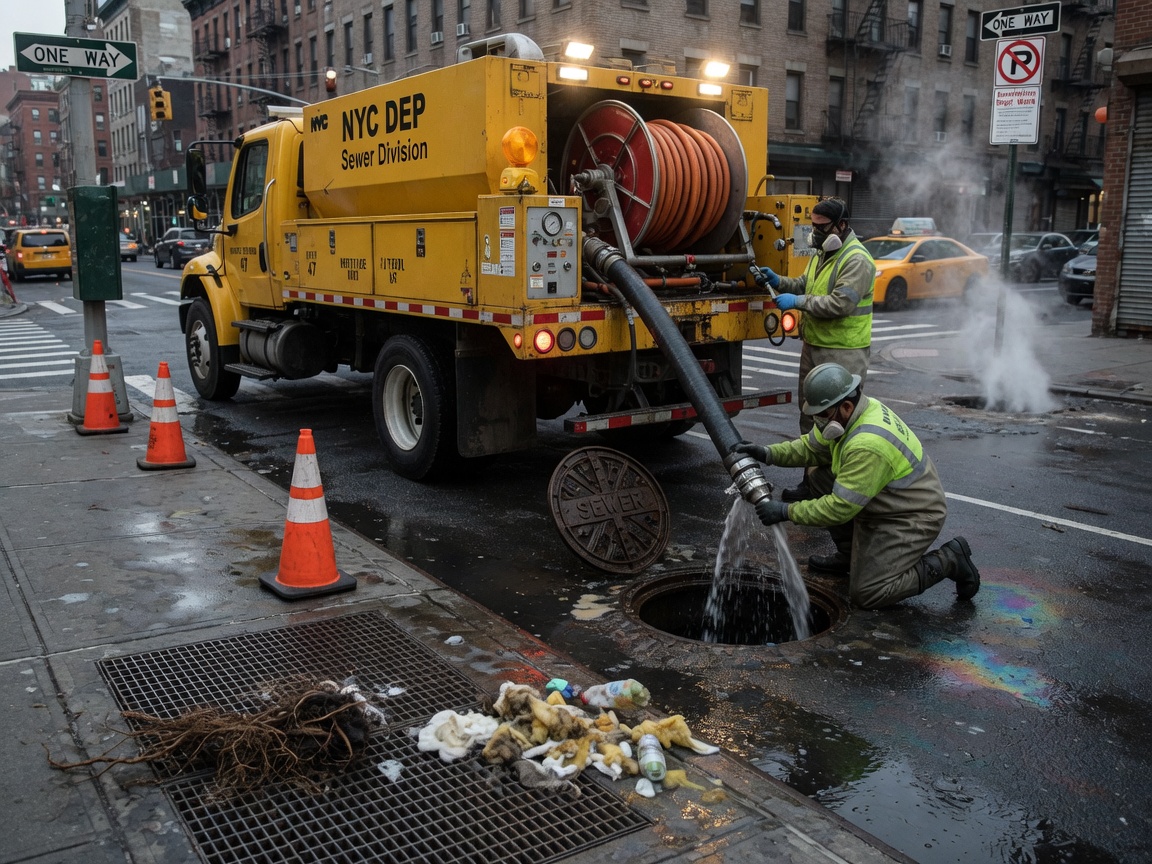
Preventing major blockages in New York City sewers requires scheduling hydro jetting every 12 to 18 months for pre-war buildings common in Manhattan and Brooklyn brownstones, combined with annual camera inspections to catch root intrusion and grease buildup early. These steps address the dense urban terrain, combined sewer overflows during nor'easters, and decades-old clay or cast-iron lines that crack under heavy traffic loads above ground.
Aging Infrastructure in Brooklyn and Manhattan
New York City's sewer lines in neighborhoods like Park Slope and the East Village often date back to the early 1900s, with many still using vitrified clay pipes that shift from subway vibrations and settling soil. Tree roots from street plantings along Bedford Avenue or St. Marks Place enter joints during dry summers, then expand in wet seasons to create partial clogs that escalate after leaf debris enters catch basins. Homeowners in these areas see backups first in basement floor drains because the main lines sit shallow under sidewalks. Regular camera scoping reveals scale and debris layers that standard snaking misses, allowing targeted cleaning before a full stoppage floods multiple units in a row house. Soil conditions around the Gowanus Canal add corrosive elements that thin pipe walls faster than in newer developments.
Winter Freeze and Spring Thaw Effects
NYC winters drop below freezing for weeks, expanding water in older pipes along the Hudson and East River waterfronts and creating hairline cracks that collect grease and sediment. When temperatures rise in March, meltwater surges through lines already narrowed by winter buildup, pushing backups into ground-floor apartments in areas like Long Island City. The freeze-thaw cycle also heaves pavement over mains in Queens neighborhoods such as Astoria, stressing joints further. Property owners reduce risk by clearing roof drains and downspouts before December and scheduling main sewer line cleaning before the first hard freeze hits. These patterns differ from suburban counties where deeper frost lines protect lines better.
Grease and Debris from Dense Commercial Zones
Restaurants clustered in Manhattan's Theater District and along Queens Boulevard generate daily volumes of fats, oils, and food solids that cool and solidify inside laterals before reaching the main. In buildings converted from industrial use, narrow 4-inch lines clog within months when staff pour grease down sinks. Hydro jetting services cut through these layers at 4,000 psi without chemicals that could damage old pipes, restoring full flow where mechanical augers only bore a small hole. Building managers in mixed-use blocks track tenant grease trap pumping schedules to prevent shared laterals from backing up during lunch rushes or weekend events.
Integrating Hydro Jetting into Routine Maintenance
Property owners in New York City gain the most from combining sewer hydro jetting with quarterly visual checks of cleanouts and annual full-line scoping. This approach catches issues in cast-iron stacks common to 1920s walk-ups before they affect multiple floors. During heavy rain events, clear lines move stormwater faster, lowering the chance of combined sewer backups reported by DEP alerts in low-lying blocks near Newtown Creek. What Happens During a Hydro Jetting Service? explains nozzle selection for different pipe materials. Can Hydro Jetting Remove Grease Buildup? details pressure settings that protect fragile joints while clearing 30-year accumulations. Main Sewer Line Cleaning addresses the full run from building to curb in one visit.