2026-08-22 · Ray Kopca
How Often Should Sewer Lines Be Hydro Jetted?
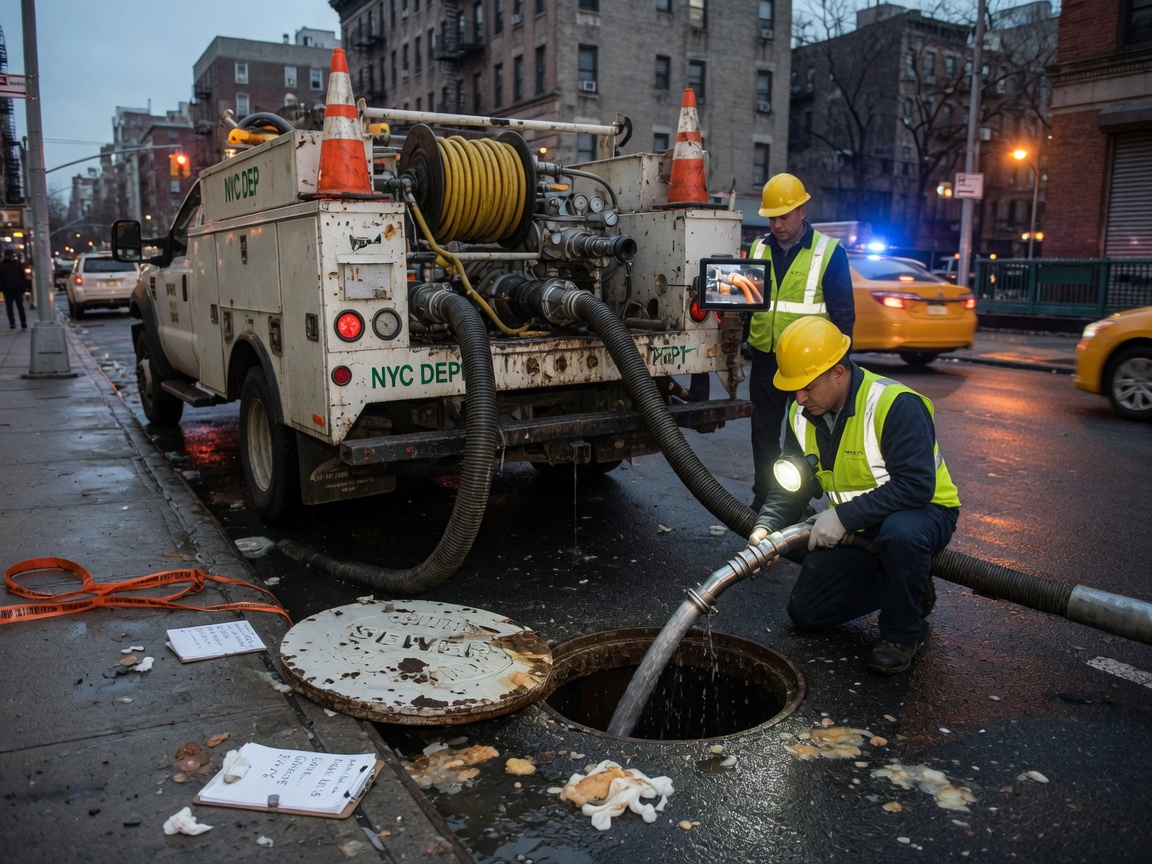
Sewer lines in New York City typically need hydro jetting every 3 to 5 years for residential properties built before 1950. This range accounts for the city's mix of clay, cast iron, and early PVC lines that accumulate grease, roots, and sediment faster than newer suburban setups. Pre-war buildings in neighborhoods like Brooklyn Heights and the West Village often see buildup accelerate after heavy rain events that overwhelm combined sewer systems.
Local Conditions Affecting Sewer Line Frequency
New York City's dense urban layout and aging infrastructure directly shape how often hydro jetting services are needed. Many blocks in Manhattan and Queens still rely on clay pipes installed in the early 1900s that crack or offset over time, allowing tree roots from street plantings to enter. Heavy spring rains and winter snowmelt increase water volume through the system, pushing debris into main lines faster than in drier regions. Properties near the East River or in low-lying areas of the Bronx experience more frequent backups due to tidal influences on the combined sewer network. These factors make a 3-year interval common for restaurants and multi-family buildings while single-family homes in quieter blocks of Staten Island may stretch closer to 5 years before lines restrict flow.
Recommended Schedule for Residential Properties
Homeowners in New York City should plan hydro jetting services on a 3-year cycle for lines serving kitchens and bathrooms with high grease output. Properties with older cast iron laterals benefit from inspection every 24 months followed by hydro jetting if camera footage shows 30 percent or more buildup. In areas like Park Slope or Astoria where brownstones connect to 6-inch mains, root intrusion from sidewalk trees often requires treatment at the 4-year mark. Scheduling aligns with seasonal patterns, such as after fall leaf drop when organic matter enters lines or before summer when usage spikes. This approach prevents emergency calls during nor'easters when the Department of Environmental Protection reports higher complaint volumes.
Signs It Is Time for Hydro Jetting
Slow drains that persist after basic snaking indicate the need for hydro jetting services rather than repeated mechanical attempts. Gurgling sounds from toilets during heavy rain point to partial blockages in the main sewer line common throughout New York City. Multiple fixtures backing up simultaneously usually trace to the shared lateral rather than individual traps. Recurring odors near basement floor drains signal sediment layers that high-pressure water can remove completely. Property owners noticing these patterns should request camera inspection before committing to full hydro jetting to confirm the exact location and severity.
How Usage Patterns Change the Timeline
Restaurants and food service businesses in New York City require hydro jetting every 12 to 18 months due to consistent grease discharge into the system. Residential properties with multiple occupants or frequent entertaining see buildup rates increase by roughly 50 percent compared with single-person households. Buildings converted from single-family to multi-unit use often need earlier intervention because added fixtures overload the original line size. Seasonal rentals in areas like the Rockaways experience spikes after summer occupancy when lines sit idle for months then face sudden high flow. Tracking these variables helps set a realistic interval tailored to each address rather than a generic citywide rule.
Reviewing footage from a prior what happens during a hydro jetting service visit shows exactly how much material was removed and whether the interval should shorten. Comparing that data with current flow rates gives owners a clear picture of when the next sewer hydro jetting is warranted. Homeowners can also reference hydro jetting vs drain snaking to understand why high-pressure cleaning addresses root causes that mechanical methods miss in older NYC lines.