2026-08-22 · Ray Kopca
How Tree Roots Affect Sewer Lines
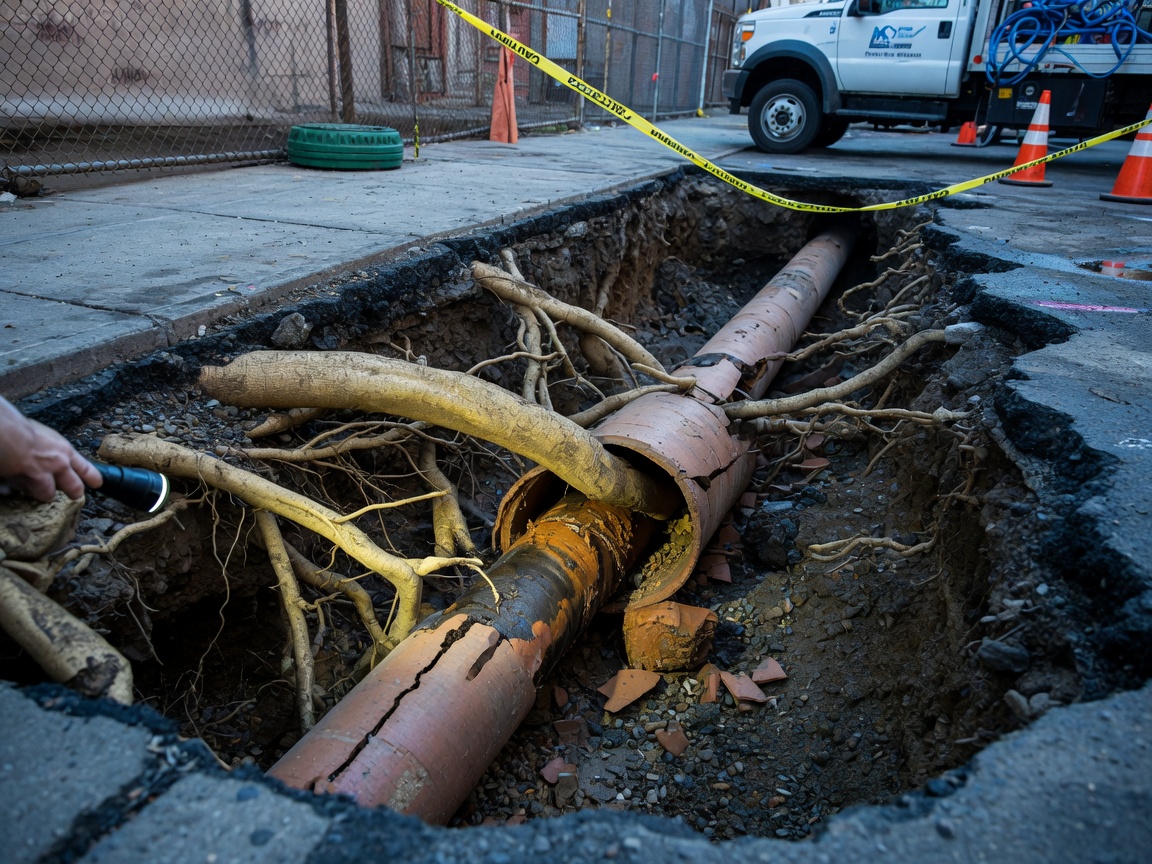
Tree roots affect sewer lines in New York City by entering small joints and cracks in older pipes, then expanding inside the line until flow is restricted or blocked. Mature trees in neighborhoods with clay or cast iron mains accelerate this process because roots follow the path of least resistance toward consistent moisture.
The Mechanics of Root Intrusion in NYC Sewer Systems
Roots grow toward water sources and detect the faint moisture escaping from pipe joints in the ground. Once a root hair finds an opening it widens the gap over seasons, allowing thicker roots to follow. In New York City the combination of shallow sewer laterals and dense tree cover in residential blocks makes intrusion common. The roots do not break solid pipe walls but exploit every seam, especially in lines installed before modern gasket materials became standard. Over time the mass inside the pipe traps solids and grease, turning a minor intrusion into a complete stoppage that requires mechanical removal.
Impact on Older Neighborhoods Like Brooklyn and Queens
Brooklyn brownstones and Queens row houses often sit on 80- to 100-year-old laterals made of clay or cast iron that were never designed to resist root pressure. Sidewalks and small front yards place mature maples and oaks directly above these lines, so roots travel horizontally only a few feet before reaching the pipe. Seasonal freeze-thaw cycles in the New York City area open micro-cracks that roots exploit the following spring. Homeowners in these blocks notice the same pattern each year: slow kitchen drains in late fall when roots are still active, followed by full backups after heavy winter rains push debris against the root mass.
Recognizing Root-Related Blockages
Slow drainage that improves briefly after a plunger or snake but returns within weeks points to root intrusion rather than simple grease. Gurgling sounds from lower-level toilets or tubs during heavy rain also indicate roots have narrowed the line. In New York City homes with front-yard trees, plumbers often find fine root hairs on the head of a drain snake after only 15 to 20 feet. Multiple fixtures backing up at once usually means the problem sits in the main lateral rather than a single branch line. These patterns help distinguish root damage from other common causes such as offset joints or collapsed sections.
Role of Hydro Jetting in Clearing Root Clogs
Hydro jetting uses high-pressure water to cut through root masses and scour the pipe walls clean. The process reaches farther than mechanical snakes and removes the fine root hairs that would otherwise regrow quickly. For many New York City residential laterals this restores full flow without excavation. When roots have already deformed the pipe, however, jetting serves only as a temporary measure. How Does Hydro Jetting Work? explains the equipment and pressures used on typical 4-inch and 6-inch lines found under city sidewalks.
Long-Term Solutions and Prevention
After clearing roots, homeowners often compare hydro jetting or sewer line replacement depending on pipe condition. Installing a cleanout near the foundation allows future jetting access without cutting into finished floors. Strategic root barriers or selective tree removal can reduce pressure on the line, though most older New York City properties keep their existing trees. Regular inspections every 18 to 24 months catch new growth before it reaches clog size. Properties that schedule preventive main sewer line cleaning avoid the emergency calls that follow heavy spring rains when roots are most active.