2026-08-22 · Ray Kopca
Restaurant Drain Hydro Jetting: Grease, Fats & Oils
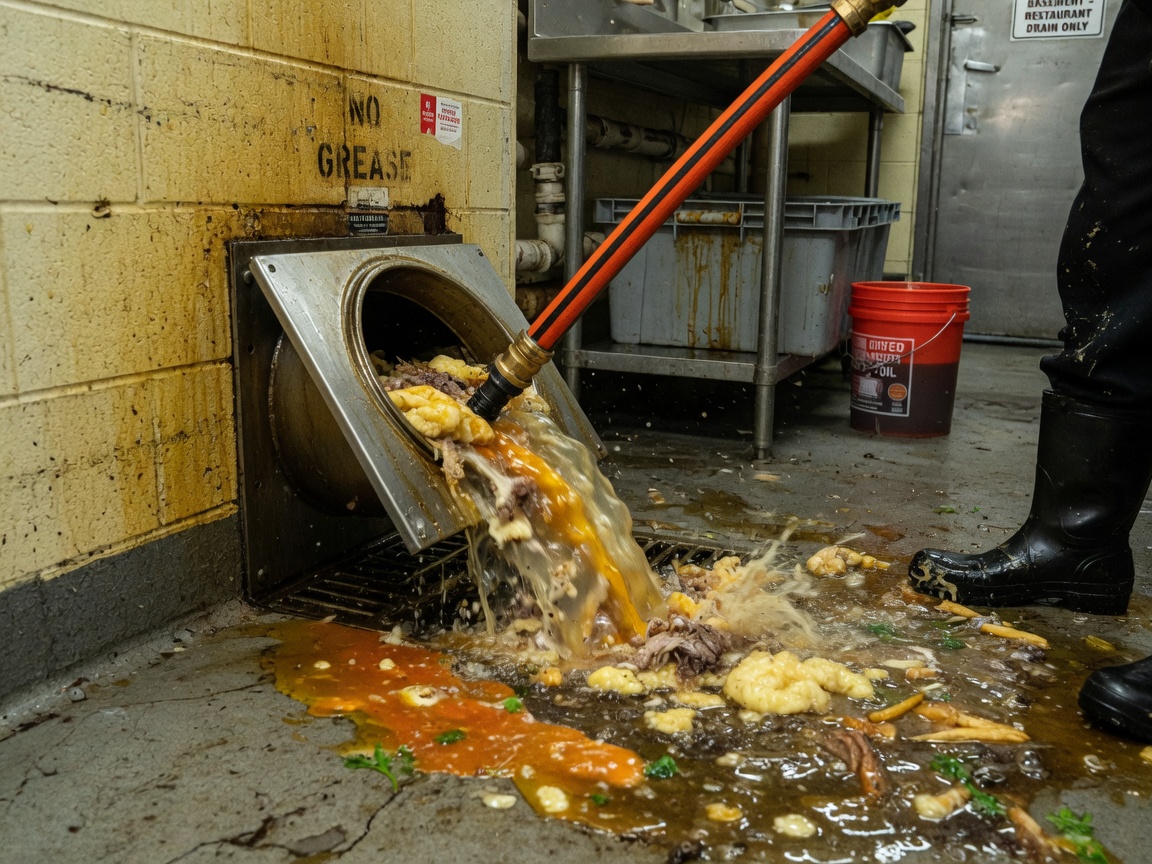
Hydro jetting clears grease, fats, and oils from restaurant drains in New York City by sending water at 3,000–5,000 PSI through the line to scour buildup from pipe walls. This restores full flow in a single visit for most commercial kitchens.
Grease, Fats, and Oils in NYC Restaurant Drains
New York City restaurants generate heavy volumes of fats, oils, and grease from fryers, grills, and dish sinks. These materials cool and solidify inside pipes, especially in buildings constructed before 1970 that still use narrow cast-iron lines. Neighborhoods such as Midtown Manhattan and Williamsburg see frequent backups because daily service volumes exceed what gravity drains can handle once FOG layers reach one-quarter inch thick. Cold winter temperatures accelerate hardening, turning liquid grease into solid plugs within hours after closing. Owner-operated crews respond 24 hours a day, 7 days a week, because a clogged line during dinner service can shut down an entire kitchen.
How High-Pressure Water Removes Buildup
Hydro jetting equipment feeds a specialized nozzle into the cleanout and propels water in multiple directions to cut and flush deposits. The forward jet breaks through the clog while rear jets scour the pipe walls, removing residue that snaking alone leaves behind. In New York City commercial lines, operators adjust pressure between 3,500 and 4,500 PSI to avoid damaging older joints while still stripping the sticky FOG layer. The method works on 3-inch to 6-inch drains typical in restaurant basements and does not require excavation when access points exist. Crews contain and dispose of the flushed material according to local wastewater rules.
When to Schedule Restaurant Drain Hydro Jetting
Restaurants notice slow sinks, gurgling sounds from floor drains, or recurring backups after heavy service nights. These signs appear first in prep areas and dish pits where grease volumes peak. Scheduling hydro jetting every 6–12 months prevents emergency calls during peak hours. Hydro Jetting for Restaurants outlines service intervals matched to kitchen volume. Operators also combine the service with Grease Trap Hydro Jetting when the trap itself shows reduced capacity. The 24/7 availability means a line can be cleared before the next lunch rush without waiting for business hours.
Comparing Hydro Jetting to Other Methods
Snaking pushes a cable through the clog but leaves grease film on pipe walls that quickly rebuilds. Hydro jetting removes that film in one pass, extending the time between service calls. Hydro Jetting vs. Drain Snaking: Which Works Better? details the difference on commercial lines. Chemical cleaners may loosen surface grease yet fail to reach hardened deposits farther down the run and can damage older cast-iron joints common in New York City. For recurring issues tied to FOG, hydro jetting provides the most complete interior cleaning without repeated visits.
Maintaining Clear Lines After Service
After hydro jetting, kitchens reduce future buildup by scraping plates before washing, using drain screens, and scheduling regular trap pumping. Staff training on proper disposal keeps new grease from entering the system at the same rate. What Causes Recurring Drain Clogs in New York? explains how building age and menu type affect frequency. Crews document pipe condition during each visit so owners can plan future maintenance around actual wear rather than guesswork. This approach keeps lines flowing through high-volume periods without unexpected shutdowns.