2026-08-22 · Ray Kopca
What Causes Recurring Drain Clogs in New York?
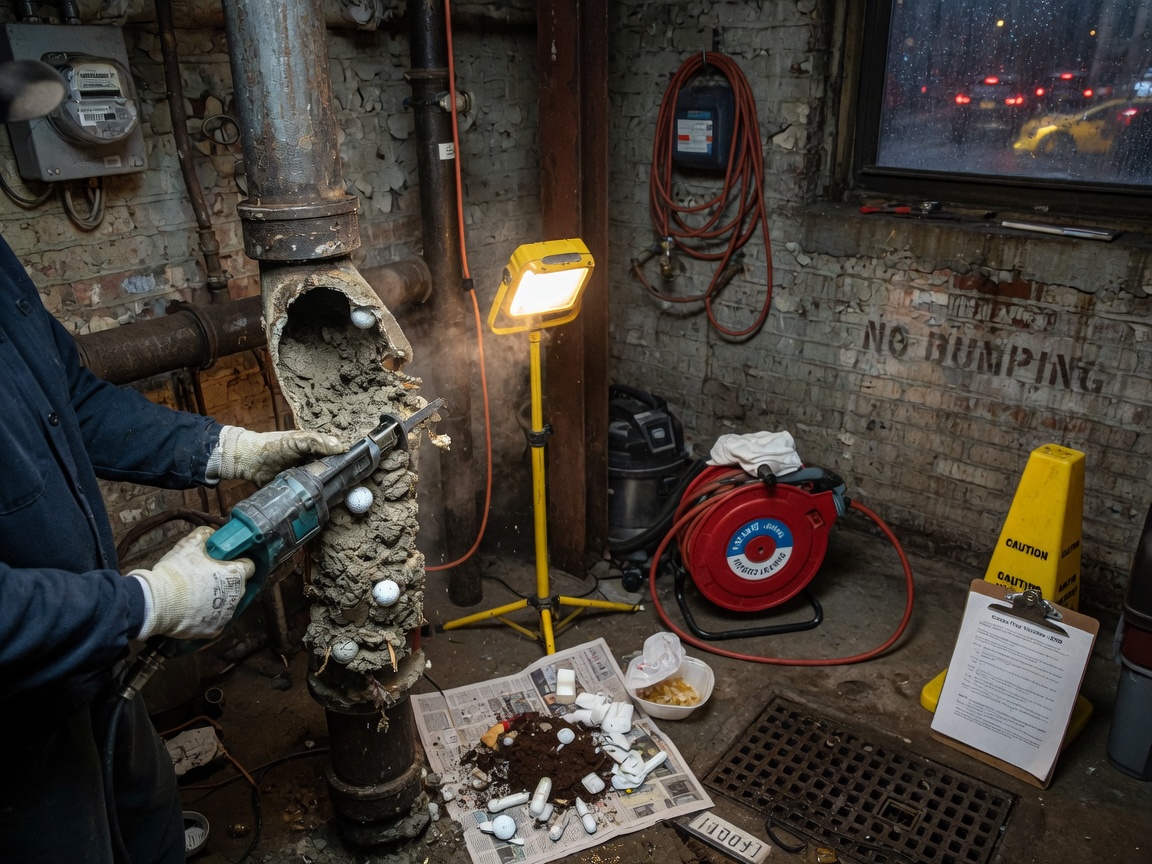
New York City properties experience recurring drain clogs primarily because of aging cast-iron pipes installed before 1940 in neighborhoods like Brooklyn Heights and the West Village, combined with narrow sewer laterals that trap debris over decades. Tree roots from street plantings in Queens and parts of the Bronx invade joints during dry spells, while restaurant grease in areas like Manhattan's Lower East Side builds up faster than standard snaking can remove. Heavy rainfall events that overwhelm the combined sewer system in Lower Manhattan and parts of Brooklyn push sediment back into building lines, restarting the cycle within weeks.
Aging Cast-Iron and Clay Pipes Common in Pre-War Buildings
Many residential buildings in Manhattan and northern Brooklyn still rely on original cast-iron stacks and clay sewer laterals laid between 1890 and 1930. These materials develop interior scale and hairline cracks that catch toilet paper, wipes, and food particles repeatedly. Once a partial blockage forms, water velocity drops and the same materials settle in the same spot, creating the recurring pattern. Properties in the West Village and Park Slope see this issue most often because their service lines run under sidewalks with heavy foot traffic and vibration that accelerates joint separation. Regular inspection with camera equipment reveals the exact location of these weak points before they cause full backups.
Tree Root Intrusion in Neighborhoods with Mature Street Trees
Queens neighborhoods such as Forest Hills and Jamaica, along with parts of the Bronx near Pelham Parkway, contain large numbers of mature maples and oaks whose roots seek moisture from sewer lines during summer dry periods. Roots enter through small joints or cracks and expand inside the pipe, creating a mesh that catches solids every time the line is used. This problem appears less in dense Manhattan but shows up regularly in two-family homes in Brooklyn's Marine Park. Hydro jetting at 4,000 psi cuts roots cleanly without excavation when performed on a scheduled basis, though untreated lines typically see regrowth within 18–24 months.
Grease and Organic Buildup from Dense Restaurant Corridors
Commercial kitchens along Arthur Avenue in the Bronx and in Flushing's restaurant district discharge fats, oils, and starches that cool and solidify inside laterals before reaching the main. Even with trap maintenance, some grease escapes and coats pipe walls, narrowing the diameter and causing backups after every heavy service period. Residential buildings near these corridors experience the same issue when shared lines connect to the same sewer. Main Sewer Line Cleaning removes the hardened layers that standard plungers cannot reach, restoring full flow without repeated service calls.
Seasonal Rain and Combined Sewer Overflows
New York City's combined storm and sanitary sewers in areas such as the East Village and Red Hook receive both wastewater and street runoff. During spring nor'easters or summer thunderstorms, water volume surges and pressure pushes settled material back toward building traps. This seasonal pattern explains why many property managers report clogs after specific weather events rather than random timing. Hydro Jetting Services clears the compacted sediment that accumulates after these events, while The Complete Sewer & Drain Maintenance Guide for New York Properties outlines inspection intervals that account for local rainfall data.
How NY Hydro Jet Pros Addresses Recurring Issues
Technicians serving New York City operate 24 hours a day, seven days a week, responding to repeat clog locations with high-pressure jetting equipment sized for 4-inch to 8-inch lines typical in the five boroughs. The process uses rotating nozzles that scour pipe walls rather than simply punching a hole, reducing the chance of immediate re-clogging. Property owners in Hempstead and North Hempstead often schedule quarterly visits after the first jetting because the restored flow capacity lasts longer than mechanical methods alone. This approach targets the actual cause instead of treating symptoms repeatedly.